
Tag: hms

The Legacy Debt Trap: Why Your 20th-Century Infrastructure is Sabotaging Your 2026 AI Ambitions

The Legacy Debt Trap: Why Your 20th-Century Infrastructure is Sabotaging Your 2026 AI Ambitions

The Hidden Weight of “Technical Debt”

For many health systems, the path to innovation is blocked by the ghosts of software past. As organizations grow through acquisitions or transition to modern EHRs like Epic or Cerner, they often leave behind a trail of “zombie” legacy systems. These are old databases and archives kept on “life support” simply because they contain historical patient records that might be needed for a legal request or a rare clinical look-back.

This isn’t just an IT nuisance; it is Legacy Debt, and the interest rates are staggering.

How Legacy Silos Hurt the Enterprise

Maintaining a fragmented landscape of old applications is a multi-front assault on your organization:

  • The Talent Drain (People Costs): Your high-value IT talent shouldn’t be spent maintaining servers for a 15-year-old software version that only three people know how to use. The labor cost of patching, securing, and supporting “zombie” systems is a massive, non-productive spend.
  • The “Data Scavenger Hunt” (Patient Care): When a clinician needs a patient’s historical oncology report or a specific lab trend from a previous provider, they shouldn’t have to log into three different portals. Delays in data retrieval lead to incomplete clinical context, redundant testing, and slower care delivery.
  • Security & Compliance Risk: Legacy systems are the “soft underbelly” of healthcare cybersecurity. They often lack modern encryption and are no longer patched by vendors, making them prime targets for ransomware that can paralyze an entire network.

The Saince Solution: Building the Unified Nexus

Saince One allows you to decommission the past to power the future. Through our Clinical Data Foundation, we provide a secure, Vendor Neutral Archive (VNA) that centralizes all historical, unstructured, and legacy data into a single, searchable repository.

Instead of paying multiple maintenance fees, you consolidate your data into the Saince Fabric Core. This doesn’t just save money; it creates a clean, high-fidelity data asset. By unifying your silos, you provide clinicians with a “single pane of glass” view of the patient’s entire history and ensure your organization is AI-ready. You cannot train a predictive model on data you can’t reach; Saince One makes that data accessible, actionable, and secure.

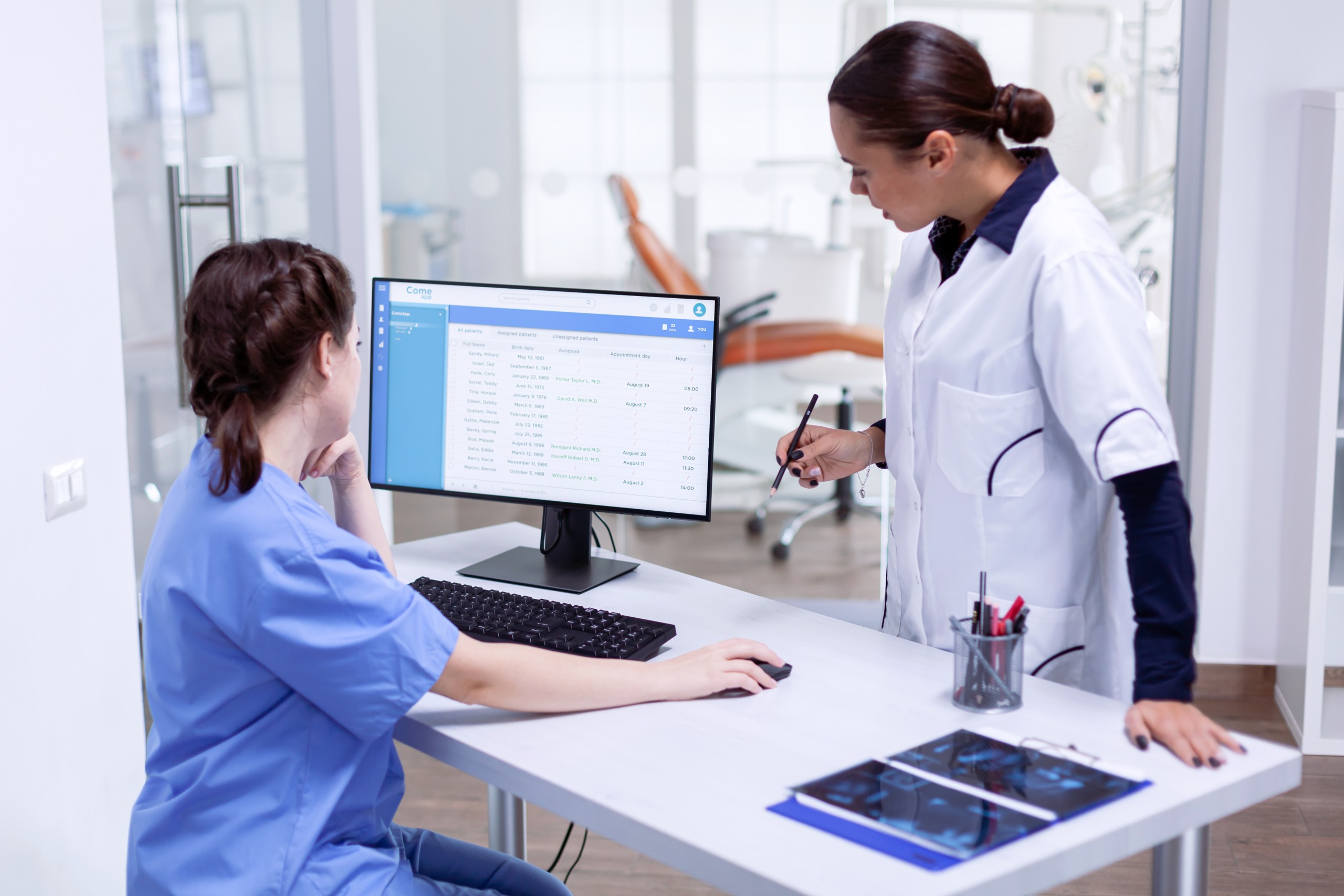
How a Modern HMS Improves Hospital Efficiency from Registration to Discharge
HMS

How a Modern HMS Improves Hospital Efficiency from Registration to Discharge

In today’s fast-paced healthcare environment, hospitals are under constant pressure to deliver high-quality patient care while managing costs, resources, and regulatory requirements. Manual processes, disconnected systems, and paperwork-heavy workflows often slow operations and impact patient experience. This is where a modern Hospital Management System (HMS) plays a transformative role.

A well-integrated HMS automates and connects every stage of the patient journey—from the first point of registration to final discharge—ensuring smoother workflows, better coordination, and improved efficiency across the hospital.

Streamlined Patient Registration and Scheduling

The patient experience begins at registration. A modern HMS replaces manual forms and repetitive data entry with a centralized digital registration process. Patient details are captured once and securely stored, making them instantly available across departments.

Key efficiency benefits include:

  • Faster patient check-ins with reduced waiting time
  • Automated appointment scheduling and queue management
  • Easy retrieval of patient history for returning visits

By eliminating duplication and errors at the front desk, hospitals can handle higher patient volumes without increasing administrative burden.

Integrated Clinical Workflow for Faster Care Delivery

Once registered, patient information flows seamlessly to doctors, nurses, labs, and diagnostic departments. A modern HMS ensures that clinical teams have real-time access to accurate patient data, enabling faster decision-making.

Doctors can view clinical notes, lab requests, diagnostic reports, and medication history from a single system. This integration reduces delays, avoids miscommunication, and helps care teams focus more on patients rather than paperwork.

Efficient Laboratory, Pharmacy, and Diagnostics Management

Departments such as laboratories, pharmacies, and radiology often operate under tight timelines. A modern HMS connects these departments digitally, ensuring smooth coordination.

For example:

  • Lab and radiology orders are generated electronically
  • Reports are uploaded directly to the patient record
  • Pharmacy receives prescriptions instantly for faster dispensing

This automated flow minimizes manual handoffs, reduces turnaround time, and improves diagnostic accuracy—ultimately leading to quicker treatment decisions.

Optimized Billing and Insurance Processing

Billing is one of the most critical yet complex hospital operations. A modern HMS automatically captures billable services as they are delivered, ensuring transparency and accuracy.

With integrated billing and insurance modules, hospitals can:

  • Generate real-time bills linked to clinical services
  • Reduce billing errors and revenue leakage
  • Speed up insurance claims and approvals

This not only improves financial efficiency but also enhances patient trust through clear and accurate billing.

Data-Driven Monitoring and Resource Management

A modern HMS provides hospital administrators with real-time dashboards and reports. From bed occupancy and staff utilization to departmental performance, decision-makers gain full visibility into hospital operations.

These insights help management:

  • Allocate resources more effectively
  • Identify workflow bottlenecks
  • Improve operational planning and compliance

Data-driven management leads to better outcomes without compromising patient care.

Smooth and Timely Discharge Process

Discharge is often delayed due to incomplete documentation, pending bills, or coordination gaps. A modern HMS simplifies discharge by ensuring all clinical summaries, prescriptions, billing, and approvals are completed within a single system.

As a result:

  • Patients experience faster, hassle-free discharges
  • Staff spend less time coordinating across departments
  • Bed turnover improves, allowing hospitals to serve more patients

Conclusion

From registration to discharge, a modern Hospital Management System acts as the backbone of hospital operations. By automating workflows, integrating departments, and providing real-time insights, HMS significantly improves efficiency, accuracy, and patient satisfaction.

In an era where healthcare excellence depends on speed, coordination, and data, investing in a modern HMS is no longer an option—it is a necessity for hospitals aiming to grow, scale, and deliver better care.

How HMS Software Transforms Hospital Operations
HMS

How HMS Improves Collaboration Between Departments

Hospitals work like ecosystems—every department depends on the other. Admissions can’t function without billing, physicians rely on labs, and pharmacies must coordinate with doctors and nurses. But when these units operate in isolation, even simple tasks can slow down care. Paper notes, delayed updates, and disconnected systems create bottlenecks that affect both staff and patients.

A Hospital Management System (HMS) addresses these problems by serving as a digital backbone for the hospital. It links every department, keeps information flowing, and helps staff work together without unnecessary delays.


Connecting the Entire Hospital

Instead of each department maintaining its own system, an HMS creates a single, unified platform. From registration and diagnostics to pharmacy and discharge, all updates are stored in one digital record. This eliminates duplicate entries and ensures that all staff see the same version of patient information.


Speeding Up Communication

Consider a patient undergoing an MRI. Without HMS, the results might be printed and physically sent to the physician. With HMS, the report is uploaded instantly to the patient’s file. The doctor reviews it without delay, and if treatment is required, the pharmacy and billing teams are notified automatically. The result is faster decision-making and smoother collaboration.


Clearer Accountability

Hospitals need more than speed—they need reliability. An HMS tracks every action taken: who entered patient data, when a test was requested, or when medication was dispensed. This digital trail improves trust between departments and makes it easier to trace errors or resolve disputes quickly.


Smarter Resource Sharing

Efficient collaboration also means making the most of available resources. HMS tools display real-time data on bed occupancy, OT schedules, and inventory levels. With this visibility, staff can coordinate better—avoiding scheduling conflicts and ensuring patients get timely care.


Turning Data Into Insights

Hospital leaders often struggle to see the bigger picture when data is scattered. With HMS dashboards, performance indicators from different departments appear in one place. Administrators can track patient volumes, revenue, and clinical outcomes in real time, allowing them to take quick, well-informed decisions.


Where Saince Inspire HMS Fits In

Not all HMS platforms offer the same depth of collaboration. Saince Inspire HMS is designed to unify hospital operations while keeping the system intuitive for staff. Its real-time dashboards, compliance-ready workflows, and secure integration across departments make it a strong choice for hospitals aiming to break down silos and deliver better care.


Final Note

In today’s healthcare environment, departments can’t afford to work in isolation. Collaboration improves efficiency, reduces errors, and enhances patient satisfaction. A robust HMS provides the digital foundation for this teamwork, ensuring hospitals function as a truly connected ecosystem.